
Throughout my teaching career, I have found myself making endless comparisons to visual art while in the poetry classroom. I’ll tell my students, “When you look at a piece of art, sometimes the experience is just enjoying it and moving on with your life. Poetry is like that too. We don’t need to decode the thing to death.”
Perhaps it seems obvious to state, but poetry is an artform that uses words to create images just as visual art does with the artists’ medium of choice, and this is, almost certainly, why I continue to return to this analogy.
Perhaps it seems obvious to state, but poetry is an artform that uses words to create images just as visual art does . . .
In the fall of 2023 my colleague Britta Urness and I conceived of a cross-campus exchange based on our enjoyment of each other’s artforms. Britta is a painter and printmaker. I am a poet. We knew that our students and their approaches to creativity had more in common than they might realize: vulnerability, self-reflection, editing, revision, a touch of hubris. We organized this exchange so that each of my poetry students would write an ekphrastic poem in response to an image from a painter in Britta’s class. Painters in “Painting I” would receive a poem that they would use as inspiration for a painting.
We started our exploration into ekphrasis by looking at examples. Natasha Trethewey’s “Repentence,” WH Auden’s “Musée des Beaux Arts,” Frank O’Hara’s “Why I Am Not a Painter.” We talked about the extent to which the original artwork is or isn’t in the poem. How does the poet give us a sense of the piece? How do we see it without seeing it? How do they use reflections on art to think about the self? The human condition? An understanding of art itself?
Everybody loves a field trip. So for the next step in the process, we walked over to the library and sought out the art on display. There we practiced looking and writing. My students milled about the quiet, stark plains of the library (a landscape of purging and “re-allocation to digital resources”). Still, there is art on the walls and in the gallery. In the fall of 2023, when we first conceived of this project, the displays were pieces from faculty and staff within the university system. In the fall of 2025, during its second iteration, the pieces were handcrafted wedding dresses. We wandered and wrote. Some people sat on the floor.
In a post-field trip debrief one student wrote, “Looking back at each of my poems, you can easily spot where inspiration struck.”
She had chosen a painting she knew well. She had helped put it up the summer before while working on campus. But when reexamining it, she couldn’t decide why it had stayed with her, why it had mattered so much that she had walked right to it.
She wrote, “I stared at it for a while thinking, then I remembered what Dr. Arlett said about also writing about other things that remind you of the painting. That’s when the words became easier to write and made more sense as I kept going.”
The poem born from the fieldtrip, which she eventually workshopped, reflected on the painting’s depiction of a white woman with a cloud where her head would be. The poem contemplated race and the over-representation of whiteness in visual arts.
No Reflections
By Brisa RodriguezBlank
What else is there to say?
Is this
what death aspires
to be?But yet I don’t see
myself in you.
Your white skin becomes
a bell,
that you and I are not alikeYet death is the same.
But you do not care for me
as I am forced to mourn for you.As only angels can be white.
After the first two parts of the exercise—immersion in examples and the field trip to practice the act—each student then received an image of a painting created by a student enrolled in the painting class.
I had faith in the class’s ability to take the foundational work we had done together and work on their poems outside of class. Still, when I told them they were on their own for the next month, I anticipated more terror. More anxious emails and office hours visits. Instead, the class took this as an exercise in trust: that I knew they could do this and do it well. They rose to the occasion. They understood if they needed me, I would be there to help. This was enough of a safety net, it seemed.
Two weeks before the final poems were due, I arranged for small group workshops on the pieces. I carefully curated the groups with an eye towards style, voice, and experience. Because we were nearing the time the poems would be seen by the painters, I asked that the group’s feedback focus not on major revisions but on what was working and what could be tweaked. We also spoke about the need for the poem to be a strong piece of writing that was not beholden to the image it was responding to. It needed to be able to stand on its own and be cogent in conversation.
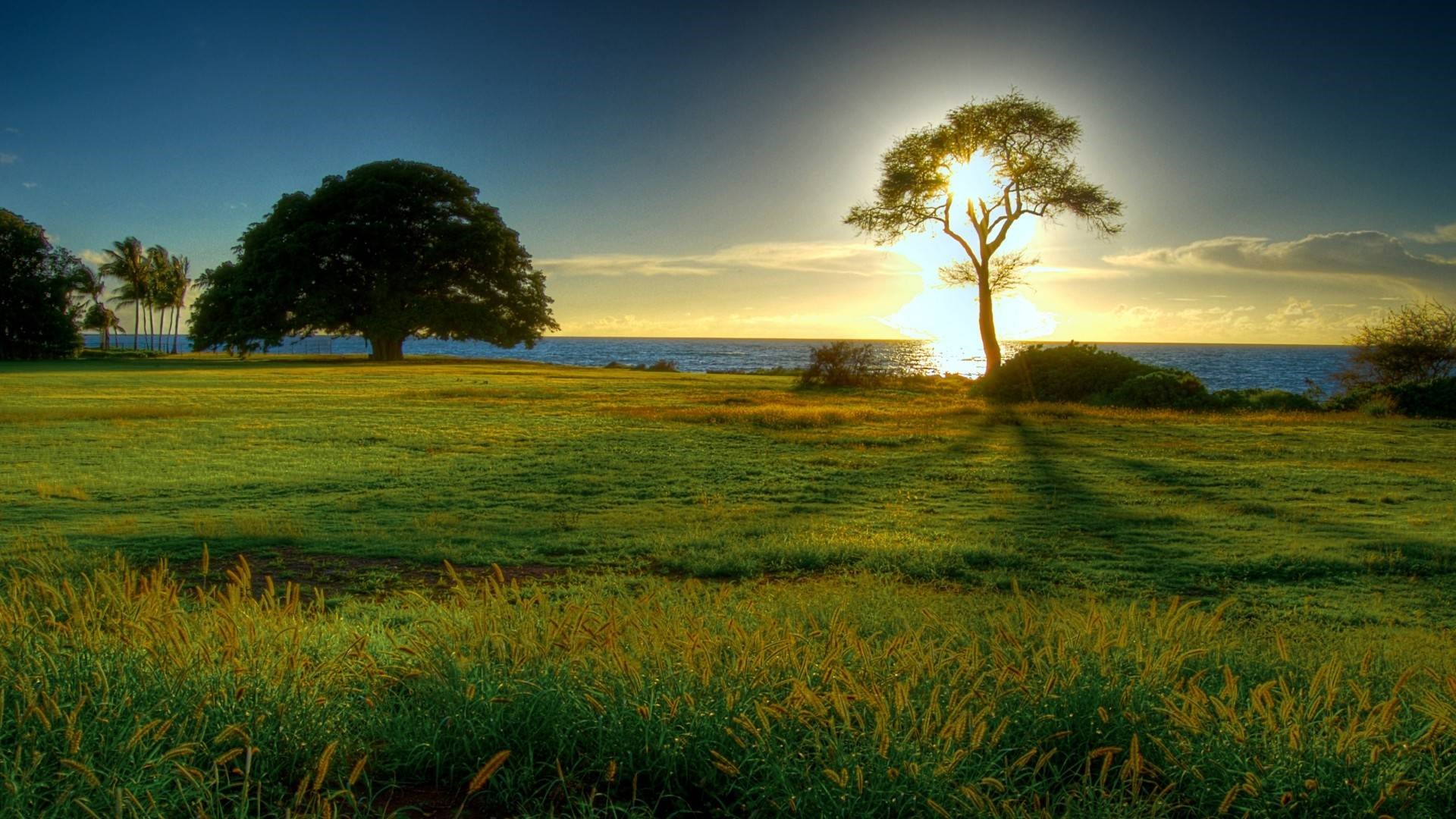
The end of the semester arrived, and on a cold, clear night with the Christmas concert happening a few buildings away, we gathered at the campus art gallery to see our combined efforts displayed. Thirty paintings and 30 poems speaking back and forth to each other. Poems about the letter “S,” explosions, pennies, moving bodies. Paintings depicting sunrises, high heeled shoes, a man praying at an altar. I watched as the two classes mingled, at first a little awkwardly and then more exuberantly, chattering away with excitement. Britta and I connected students who had been partnered together and watched them ask questions about each other’s work. My students got to observe their work connected to other art forms by having their poetry read and responded to in real time by friends and strangers.


So often the work of poetry is experienced in private. Outside of the small group of students who signed up to create and workshop together, very few people get to see the magic we create in the classroom of the beautiful objects we make together. W. H. Auden famously wrote that “poetry makes nothing happen,” a line that has provoked writers ever since. In an era when those of us in the humanities and arts are constantly asked to justify our own existence, interdisciplinary collaboration and public outreach are a way for us to demonstrate the “product” more tangibly and accessibly to those who hold the purse strings. It is much harder to deny the impact of the arts when standing in a room with 40 people all smiling, laughing, and engaging with the very thing we keep being told does not matter.
Featured photo by Ron Lach.

Megan J. Arlett
Megan J. Arlett was born in the UK, grew up in Spain, and now lives in New Mexico where she teaches at Eastern New Mexico University. Her work has appeared in Best New Poets 2019, Best New British and Irish Poets, Gulf Coast, The Kenyon Review, New England Review, Prairie Schooner, The Sun, and Virginia Quarterly Review. Her first book, The Garden Party, is forthcoming with Northwestern University Press.